
Cash-Out Refinance Ohio: Home Equity Guide 2026
Home Equity, Cash-Out Refinance Ohio, HELOC, Columbus Mortgage
Cash-Out Refinance in Ohio: The Complete Home Equity Guide (2026)
Learn how a cash-out refinance works in Ohio, how much equity you may be able to access, and how cash-out refinancing compares with a HELOC and home equity loan so you can choose the option that fits your goals.
Your Home Equity May Be a Financial Tool
If you have owned your home in Ohio for several years, there is a good chance you have built up equity. You may have benefited from rising home values in areas like Columbus, Pickerington, Dublin, and Westerville, and you have steadily paid down your mortgage balance. That equity represents potential borrowing power—but using it wisely is the key question.
Many homeowners start exploring a cash-out refinance in Ohio when they want to remodel a kitchen, consolidate higher-interest debt, pay for education, invest in another property, or simply build a financial cushion. A cash-out refinance is one way to tap home equity in Ohio, but it is not the only way. You can also consider a HELOC or a home equity loan, and each works differently and carries different trade-offs, especially in today’s rate environment where Ohio cash-out refinance APRs often range around 7.0%–7.3% depending on credit profile (MyFinancialPrograms, July 2026).
This guide will walk you through cash-out refinancing in Ohio, how home equity works, how much you may be able to access, and how a cash-out refinance compares with a HELOC and a home equity loan so you can make an informed decision—not just chase the first option you hear about.
What Is a Cash-Out Refinance?
A cash-out refinance replaces your existing mortgage with a new, larger mortgage. At closing, the new loan pays off your current mortgage. The difference between the new loan amount and what you owe on the old mortgage—minus closing costs and other adjustments—is provided to you as cash. You can then use those funds for a variety of purposes, subject to program guidelines and your own financial plan.
For example, imagine the following situation:
Home value: $400,000
Current mortgage balance: $200,000
New mortgage amount: $275,000
At first glance, it may look like you would receive $75,000 in cash. In practice, your actual proceeds will be reduced by closing costs, any prepaid items, and other transaction adjustments. This is only an illustration to show the concept, not a specific lending offer or guarantee of eligibility or terms. Any refinance mortgage in Ohio must be fully underwritten and priced based on detailed information about your situation, including credit, income, property, and program rules.
How Does Home Equity Work?
Home equity is a simple concept with important implications. At a basic level:
Home Value – Mortgage Debt = Approximate Equity
If your home is worth $400,000 and you owe $200,000 on your mortgage, you have roughly $200,000 in equity. However, that does not mean you can borrow the full $200,000. How much equity you can access through a home equity refinance in Ohio depends on several factors, including:
Loan program (conventional, FHA, VA, jumbo, or specialty)
Verified property value at the time of application
Existing mortgage balance and any other liens
Your credit profile and payment history
Income and debt-to-income ratio
Property type (single-family, condo, 2–4 unit, etc.)
Occupancy (primary residence, second home, or investment)
Applicable loan-to-value (LTV) and combined loan-to-value (CLTV) limits
Lenders use these factors to determine what percentage of your home’s value can be financed and whether a cash-out refinance in Ohio is appropriate for your profile and goals.
How Much Equity Can You Cash Out?
When you explore cash-out refinancing in Ohio, two related concepts become important: Loan-to-Value (LTV) and Combined Loan-to-Value (CLTV). These ratios help lenders measure how leveraged your property will be after the new financing is in place.
Loan-to-Value (LTV)
LTV compares your total mortgage balance to your home’s value. If your home is worth $400,000 and your new loan after a cash-out refinance will be $280,000, your LTV would be 70% ($280,000 ÷ $400,000). Different loan programs have different maximum LTVs, and those limits can vary based on occupancy, property type, and other risk factors. Because these guidelines change over time, it is better to talk with an Ohio mortgage broker than rely on a fixed percentage found in an old article.
Combined Loan-to-Value (CLTV)
CLTV looks at the total of all loans secured by your property compared with its value. For example, if you have a $220,000 first mortgage and a $30,000 HELOC on a $400,000 home, your CLTV is 62.5% ($250,000 ÷ $400,000). CLTV becomes especially important when you are comparing a HELOC vs cash-out refinance, or when you already have a second mortgage in place and are considering restructuring everything into one new loan.
How Is Your Home’s Value Determined?
The amount of equity you can access through a refinance mortgage in Ohio depends heavily on your home’s current market value. Lenders may use different methods, including:
Full appraisal: A licensed appraiser visits the property, evaluates its condition, and compares it with recent local sales.
Desktop or automated valuation: In some cases, data-based models or limited reviews may be used instead of a full interior inspection.
Comparable sales: Recent sales of similar homes in your neighborhood help establish a realistic value range.
Property condition: Updates, deferred maintenance, additions, and overall upkeep all influence value.
Local market trends: Supply, demand, and price trends in your specific area of Ohio matter.
Even within Central Ohio, values can vary significantly from one community to another. Homes in Pickerington, Columbus, Dublin, New Albany, Westerville, Reynoldsburg, Canal Winchester, and Lancaster may follow different pricing patterns. That is why a personalized estimate of value is such a critical step before deciding how to tap home equity in Ohio.
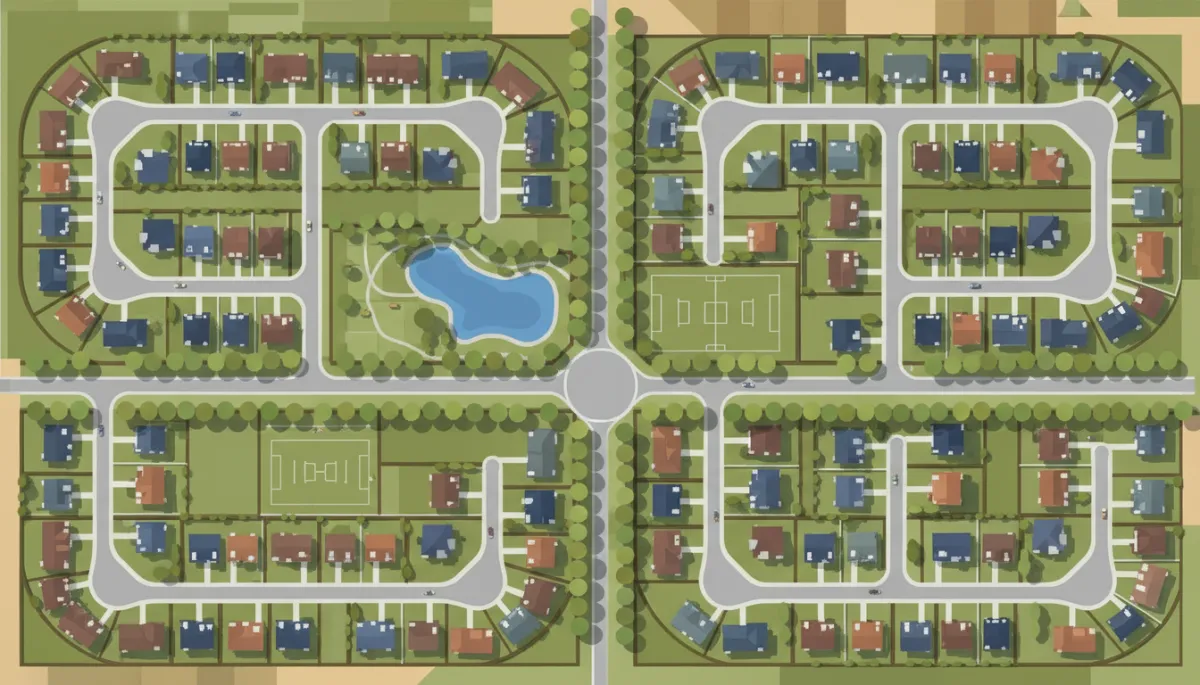
Local market values across Central Ohio strongly influence how much equity you can access.
What Can You Use Cash-Out Refinance Funds For?
Home Improvements and Renovations
One of the most common uses of a home improvement refinance is funding upgrades that may increase comfort, functionality, or even value. Examples include kitchen renovations, bathroom remodels, finishing a basement, adding a room, replacing a roof, upgrading HVAC, installing new windows, improving outdoor living spaces, or making accessibility modifications. Using a cash-out refinance for improvements can make sense if you are planning a larger, one-time project and prefer a single fixed payment structure instead of juggling multiple smaller loans or credit cards.
Debt Consolidation
Another common reason to refinance to pay off debt is consolidating higher-rate credit cards, personal loans, or other obligations into a single mortgage payment. While this can potentially lower your monthly payment and simplify your finances, it is important to understand the trade-off: you are converting unsecured debt into debt secured by your home. The debt does not disappear—it is simply restructured, often over a longer term. If spending habits are not addressed, it is possible to run balances back up and end up in a worse position. A thoughtful plan is essential.
Investment Property and Real Estate Opportunities
Some homeowners use a cash-out refinance Columbus Ohio strategy to generate funds for a down payment or renovations on another property. This could involve purchasing a rental home, improving an existing investment, or building reserves. If you are exploring investment real estate, you may also want to learn about DSCR loans in Ohio, which evaluate property cash flow rather than relying solely on traditional income documentation.
Education and Major Expenses
Cash-out proceeds are sometimes used to help pay tuition, medical expenses, or other large costs. The flexibility of a home equity refinance in Ohio can be attractive, but you should weigh the long-term cost of spreading those expenses over a 15- or 30-year mortgage against other funding options. In many cases, a combination of strategies may be best.
Major Purchases or Financial Cushion
Some homeowners use equity to build a cash reserve, fund a major purchase, or create a safety net. While there can be valid reasons for this, it is wise to avoid using home equity for short-lived discretionary spending. Because your home serves as collateral, you want to make sure any borrowing aligns with a long-term financial plan rather than impulse decisions.
Cash-Out Refinance to Pay Off Credit Cards
Using a cash-out refinance to pay off credit cards can be appealing. Instead of juggling multiple high-interest payments, you could have one mortgage payment at a rate that is often lower than typical credit card APRs. With mid-2026 cash-out refinance APRs in Ohio around 7.0%–7.3% for many borrowers, that may compare favorably with double-digit card rates (MyFinancialPrograms, 2026; Bankrate, 2026).
However, the right comparison is not just your credit card interest rate versus your new mortgage rate. To truly evaluate whether a cash-out refinance Ohio strategy makes sense for debt consolidation, you should consider:
Monthly savings: How much will your total monthly obligations decrease?
Total interest cost: Will spreading the debt over a longer term increase or decrease the total interest paid?
Loan term: Are you extending your mortgage significantly to accomplish the consolidation?
Closing costs: How do fees impact the real benefit of the transaction?
Behavioral risk: Is there a plan in place to avoid rebuilding credit card balances after you pay them off?
Long-term financial plan: Does this move support your broader goals, such as retirement savings or college funding?
Approaching the decision this way helps you think like an advisor rather than a borrower shopping for the lowest immediate payment.
Cash-Out Refinance for Home Improvements
Many Ohio homeowners prefer to fund renovations through a home improvement refinance rather than unsecured personal loans or credit cards. A cash-out refinance can provide a lump sum for projects such as kitchens, bathrooms, finished basements, additions, roofs, HVAC systems, windows, outdoor living areas, or accessibility upgrades. Because the loan is secured by your home, rates are often lower than unsecured alternatives, and payments can be spread out over a longer period for affordability.
However, if your project will be completed in stages or you are not sure exactly how much you will need, a HELOC may be more flexible. With a HELOC, you can borrow what you need as invoices come in, rather than taking a single large lump sum up front. Deciding between a cash-out refinance vs home equity loan or HELOC for improvements often comes down to timing, predictability, and how comfortable you are with variable versus fixed payments.
Cash-Out Refinance vs. HELOC
Comparing a cash-out refinance vs HELOC is one of the most important decisions for homeowners exploring home equity options in Ohio. Both allow you to access equity, but they do it in different ways and are used for different purposes. In mid-2026, for example, cash-out refinance APRs in Ohio often hover around 7.0%–7.3%, while many HELOCs offer introductory rates near 4.99% or even lower before adjusting to variable rates that average closer to the high-6% to 7%+ range (MonitorBankRates, July 2026; Experian, July 2026).
Feature Cash-Out Refinance HELOC Existing first mortgageReplaced with a new mortgageUsually remains in place; HELOC is a second lienHow funds are receivedLump sum at closingRevolving line; draw as needed during draw periodInterest rate structureOften fixed (depending on program)Often variable; may start with an intro rateBorrow as needed?No, single disbursementYes, up to your limit during draw periodClosing costsSimilar to a standard refinance; can be significantOften lower; varies by lender and promotionBest forLarge, known expenses and restructuring existing mortgageFlexible, ongoing, or uncertain expenses over time
The Most Important Question: What Rate Do You Already Have?
If you already have a low first-mortgage rate from a previous period—perhaps in the 3%–4% range—replacing your entire mortgage at today’s Ohio cash-out rates around 7% just to access a relatively small amount of equity may not make sense. In that situation, a HELOC can allow you to preserve your existing first mortgage and only pay the higher rate on the additional funds you actually borrow. Many Ohio HELOCs offer introductory rates in the 1.99%–4.99% range for a limited time before moving to variable rates closer to 7% (MonitorBankRates, 2026; Credit Union of Ohio, 2026).
This is why it is so important to compare HELOC vs cash-out refinance carefully, especially if your current mortgage terms are favorable. A local Ohio mortgage broker can also help you explore dedicated HELOCs in Ohio and other second-lien options that may align better with your goals.
Cash-Out Refinance vs. Home Equity Loan
A home equity loan is another way to access equity without replacing your existing mortgage. With a home equity loan, you typically receive a lump sum at a fixed rate and repay it over a set term with fixed payments, while your current first mortgage remains in place. This is different from a cash-out refinance, which replaces your first mortgage entirely and may change your interest rate, term, and payment structure on the entire balance.
Cash-out refinance: One new loan, lump sum, often fixed rate, full mortgage replaced.
Home equity loan: Separate second loan, lump sum, usually fixed rate, existing mortgage preserved.
In Ohio, some lenders and credit unions are currently offering competitive home equity loan APRs in the 4.25%–5.49% range for qualified borrowers, which can be significantly lower than many cash-out refinance rates (MonitorBankRates, FFCCU, USX, July 2026). That difference can be meaningful when you are deciding between a cash-out refinance vs home equity loan.
HELOC vs. Home Equity Loan vs. Cash-Out Refinance
FeatureCash-Out RefinanceHELOCHome Equity LoanExisting mortgageReplacedRemains; HELOC is additionalRemains; loan is additionalLump sumYesNo, draw as neededYesRevolving accessNoYes, during draw periodNoRate typeOften fixed, sometimes adjustableTypically variable, sometimes with intro promoTypically fixedMonthly paymentsOne mortgage paymentInterest-only during draw in many cases, then amortizingFixed payment over set termBest useLarge, defined need plus potential improvement of existing mortgageOngoing or uncertain costs; short-term borrowingOne-time expense when you want fixed terms and keep existing mortgageFlexibilityModerateHigh during draw periodLow to moderate
Should You Refinance a Low-Rate Mortgage to Take Cash Out?
Many Ohio homeowners locked in historically low mortgage rates in previous years. With current cash-out refinance Ohio APRs generally above 7%, you should think carefully about replacing a low-rate mortgage on a large balance just to access a relatively modest amount of equity. For example, if you owe $300,000 at 3.25% and want $40,000 in cash, a full cash-out refinance could significantly increase the cost of the entire $340,000 balance over time, even if your monthly payment still feels manageable.
Sometimes a full refinance still makes sense—especially if you are shortening the term, consolidating other debts, or if your existing rate is already similar to current markets. In other cases, a HELOC or home equity loan that leaves your first mortgage intact may be clearly preferable. The important step is to run detailed comparisons before you replace a low-rate mortgage with a higher-rate one, particularly when you live in rate-sensitive markets like Columbus and Central Ohio suburbs.
Cash-Out Refinance Closing Costs
A mortgage refinance in Columbus Ohio or anywhere in the state will usually involve closing costs, similar to those you paid when you purchased the home. These may include:
Lender origination or underwriting fees
Appraisal fees (when required)
Title insurance and settlement charges
Recording fees and state or county charges
Prepaid interest from closing date to first payment
Initial funding of escrow for taxes and insurance, if applicable
Some offers advertise “no out-of-pocket closing costs.” That can be convenient, but it does not necessarily mean there are no closing costs. Instead, costs may be rolled into the loan amount or offset by a slightly higher interest rate. Understanding how your specific loan is structured will help you compare offers accurately and avoid surprises later.
Does Cash-Out Refinancing Reset Your Mortgage?
Yes. When you complete a cash-out refinance, you are taking out a brand-new mortgage with its own term. If you have already paid seven years into a 30-year loan and then refinance into a new 30-year mortgage, you are effectively restarting the clock, which can increase the total interest paid over the life of the loan even if your monthly payment decreases.
For some homeowners, restarting the term is acceptable or even helpful because it lowers the payment and improves monthly cash flow. Others may prefer shorter terms—like 15- or 20-year options—to avoid stretching repayment too far into the future. The right choice depends on your goals, retirement timeline, and broader financial picture.
What Credit Score Do You Need?
Credit requirements for a cash-out refinance Ohio vary by loan program and lender. In general, higher credit scores can help you qualify for more favorable terms and lower APRs. For example, mid-2026 data show that Ohio borrowers with excellent credit may see cash-out refinance APRs around 7.04%, while borrowers with lower scores may be closer to 7.29% (MyFinancialPrograms, 2026). However, minimum score thresholds and pricing adjustments change over time, and equity alone is not enough; full financial qualification is usually required.
Income Requirements and Debt-to-Income Ratio
Lenders will also review your income and existing debts to calculate your debt-to-income (DTI) ratio. Eligible income sources may include W-2 wages, self-employment income, retirement income, pensions, Social Security, or certain other verified sources. Documentation requirements differ by program, but the goal is the same: to ensure your new mortgage payment, plus other monthly obligations, remains within a manageable percentage of your gross income.
If you are self-employed or your income does not fit neatly into traditional documentation boxes, there may be specialty financing options—such as bank statement loans or other Non-QM programs—that evaluate your situation differently. An experienced Ohio mortgage broker can help you explore these alternatives if standard guidelines are too restrictive for your scenario.
Cash-Out Refinance for Investment Properties
Investors may be able to use a cash-out refinance on rental properties to access equity for acquiring additional rentals, renovating existing units, funding reserves, or repositioning their portfolio. Guidelines for investment properties are often more conservative than for primary residences, with different LTV limits, pricing, and documentation requirements. You may also want to explore DSCR loans and other investment property loan options that focus on the property’s cash flow rather than traditional income verification alone.
Can You Cash Out a Paid-Off Home?
Yes. If your home is paid off, you may still be able to access equity through a mortgage secured by the property. In that case, the transaction technically functions more like a new mortgage or home equity loan rather than a traditional refinance, because there is no existing loan to pay off. You could potentially choose between a first-lien cash-out mortgage, a HELOC, or a home equity loan, depending on how you want to structure the borrowing. Qualification, documentation, and underwriting still apply, even though you do not currently owe anything on the home.
Cash-Out Refinance After Buying a Home
If you recently purchased your home, you may be wondering how soon you can refinance and pull out equity. Many programs include seasoning requirements, which specify how long you must own the property before you can complete a cash-out refinance. Some also distinguish between equity created by market appreciation and equity created by your down payment or improvements. Because these rules are program-specific and can change, it is important not to assume you can immediately refinance and extract funds right after closing on a purchase. A conversation with a knowledgeable lender is the best way to understand your realistic timeline.
Cash-Out Refinance and Taxes
In general, cash-out refinance proceeds themselves are not treated the same way as earned income, because you are borrowing against existing equity rather than receiving wages. However, the tax treatment of mortgage interest—and whether it is deductible—depends on several factors, including how the funds are used and your individual tax situation. Because tax rules can change and personal circumstances vary widely, you should discuss potential tax implications with a qualified tax professional before relying on any deduction assumptions. This guide is for educational purposes and is not tax advice.
Does Cash-Out Refinancing Affect Your Credit?
A cash-out refinance can affect your credit profile in several ways. The lender will typically pull your credit report, creating a new inquiry. Your existing mortgage may be paid off and reported as such, and a new mortgage account will be opened and reported. If you use the proceeds to pay off other debts, those accounts may be closed or show reduced balances. The exact impact on your credit score will depend on your overall profile, payment history, utilization, and how you manage accounts going forward, so it is not possible to predict a specific score change in advance. The most important factor over time is continuing to make payments on time and managing all credit responsibly.
Cash-Out Refinance in Columbus & Central Ohio
Homeowners across Columbus and Central Ohio—including Pickerington, Reynoldsburg, Canal Winchester, Lancaster, Gahanna, Grove City, Westerville, Dublin, and New Albany—have experienced different levels of appreciation and equity growth over the past decade. Your available equity depends on your purchase date, original purchase price, down payment, mortgage balance, improvements you have made, and current market value in your specific neighborhood or school district. That is why a customized review of your property and goals is essential before choosing between a cash-out refinance Columbus Ohio, a HELOC, or a home equity loan.
How the Cash-Out Refinance Process Works
Estimate your current home value. Use recent comparable sales or a professional opinion to get a realistic range.
Determine your current mortgage payoff. Check a recent statement or request an official payoff figure from your servicer.
Define how much cash you truly need. Avoid borrowing more than necessary just because equity is available.
Review your credit and income. Understand your current credit profile and gather income documentation.
Compare cash-out vs HELOC vs home equity loan. Evaluate payment, cost, flexibility, and impact on your existing mortgage.
Apply with a lender or broker. Complete an application and authorize a credit check.
Appraisal or valuation. When required, an appraiser or valuation tool estimates your home’s current market value.
Underwriting. The lender reviews your documentation, property, and credit to ensure the loan meets guidelines.
Closing. You sign final documents; your existing mortgage is paid off, and closing costs are settled.
Proceeds disbursed. Any eligible cash-out funds are provided to you according to the terms of the loan.
When Does a Cash-Out Refinance Make Sense?
You need a larger amount of equity for a defined purpose, such as a major renovation or consolidating substantial debt.
Your existing mortgage rate and terms are not significantly better than what you can obtain now.
You want one fixed payment and prefer not to manage multiple loans or lines of credit.
You are comfortable with the new term and the impact on your long-term financial plan.
When Might a HELOC Make More Sense?
Your existing first mortgage has a very favorable rate or term you want to preserve.
You need a smaller amount of equity or are unsure of the exact total you will require.
Your expenses will occur over time, such as phased home improvements or tuition payments.
You value the flexibility of a reusable line of credit and are comfortable with variable rates.
Common Cash-Out Refinance Mistakes to Avoid
Focusing only on the monthly payment and ignoring total interest over time.
Restarting a long loan term when a shorter option might be available and affordable.
Borrowing more than needed simply because equity is available.
Not comparing HELOC or home equity loan alternatives, especially when rates differ significantly.
Using home equity for short-lived discretionary spending instead of long-term priorities.
Consolidating debt without addressing underlying spending patterns, leading to new balances later.
Overlooking the impact of closing costs or assuming “no-cost” means the loan is free.
Frequently Asked Questions About Cash-Out Refinancing in Ohio
1. What is a cash-out refinance?
It is a new mortgage that pays off your existing loan and provides additional funds based on your available equity, subject to qualification and program limits.
2. How does a cash-out refinance work in Ohio?
You apply with a lender, complete underwriting, and close on a new mortgage. Your current mortgage is paid off, and you receive eligible cash-out proceeds after closing costs and adjustments.
3. How much equity do I need?
Requirements vary by program, occupancy, and property type. Lenders use LTV and CLTV guidelines to determine how much equity must remain in the home after the refinance.
4. How much cash can I take out?
The amount depends on your home’s value, your existing mortgage balance, program LTV limits, credit, income, and other factors. A personalized review is necessary for an accurate estimate.
5. What can I use the money for?
Common uses include home improvements, debt consolidation, education costs, major purchases, or investment opportunities, subject to program rules and your financial plan.
6. Is cash-out refinancing taxable?
Loan proceeds are generally not treated as taxable income, but the deductibility of interest depends on how funds are used and your tax situation. Consult a tax professional for advice.
7. Does a cash-out refinance hurt my credit?
It can affect your credit due to a new inquiry, a new mortgage account, and changes to existing accounts, but the specific impact varies. Responsible payment behavior is the most important long-term factor.
8. Can I refinance a paid-off home for cash?
Yes, you may be able to obtain a mortgage or home equity loan secured by your property, subject to qualification and program guidelines.
9. Can I cash out an investment property?
In many cases, yes, though guidelines are often stricter. You can also explore DSCR and other investment-focused loan options.
10. How long does a cash-out refinance take?
Timelines vary by lender and complexity but often range from a few weeks to over a month, depending on appraisal, documentation, and underwriting.
11. Does refinancing restart my mortgage term?
Yes, you receive a new loan with its own term. You can often choose different term lengths based on eligibility and goals.
12. Is a cash-out refinance better than a HELOC?
Neither is automatically better. A cash-out refinance may be preferable for large, one-time needs and when your existing rate is not highly favorable. A HELOC may be better for flexible, shorter-term needs or when you want to keep a low-rate first mortgage.
13. Is a HELOC better if I have a low mortgage rate?
Often, yes. A HELOC can allow you to preserve your low-rate first mortgage and only borrow at current rates on the additional funds you need, though you must be comfortable with variable rates and line terms.
14. Can I use cash-out funds to buy another property?
Yes, many investors and homeowners use equity as a down payment or capital for another property, subject to loan program guidelines and your overall financial profile.
15. Can I use cash-out to consolidate debt?
Yes, but it is important to compare total costs, understand the risks of converting unsecured debt into mortgage debt, and address spending habits so you do not rebuild balances.
16. What are typical closing costs for a cash-out refinance in Ohio?
Closing costs vary but often include lender fees, appraisal, title, recording, and prepaid items. They may be paid out of pocket, rolled into the loan, or offset by rate choices.
17. Should I refinance just to remodel my home?
It can make sense if the project is substantial, adds value or long-term utility, and the new loan terms fit your overall financial plan. Comparing HELOC and home equity loan alternatives is wise before deciding.
Why Work With Oak & Key Lending?
When homeowners think about tapping equity, the first question is often, “Can I get a cash-out refinance?” A more helpful starting point is, “What is the smartest way for me to access this equity?” Because Oak & Key Lending operates as a mortgage broker, the focus is on comparing solutions rather than steering every situation into the same product. That may mean a cash-out refinance, a HELOC, a home equity loan, or another strategy entirely, depending on your goals and current mortgage terms.
By reviewing your home value, existing mortgage, credit, income, and long-term plans, Oak & Key can help you understand how different home equity options in Ohio might affect your payment, total interest, flexibility, and timeline. The goal is not just to approve a loan, but to help you use your home equity as a thoughtful financial tool.
Your Home Equity Gives You Options. Let’s Compare Them.
Before you replace your existing mortgage, it pays to see the full picture. Oak & Key Lending can compare a cash-out refinance Ohio, HELOC, home equity loan, and other available strategies side by side so you can clearly see potential payments, costs, and long-term differences. If you are in Columbus, Pickerington, Reynoldsburg, Canal Winchester, Lancaster, Gahanna, Grove City, Westerville, Dublin, New Albany, or anywhere in Central Ohio, your next step is simple: start a conversation, outline your goals, and let an experienced advisor help you choose the option that makes the most sense for your home and your future.
