USDA Loans Ohio: Guide to Zero-Down Home Loans
Home Loans, USDA Loans, Ohio Real Estate, Zero-Down Mortgages
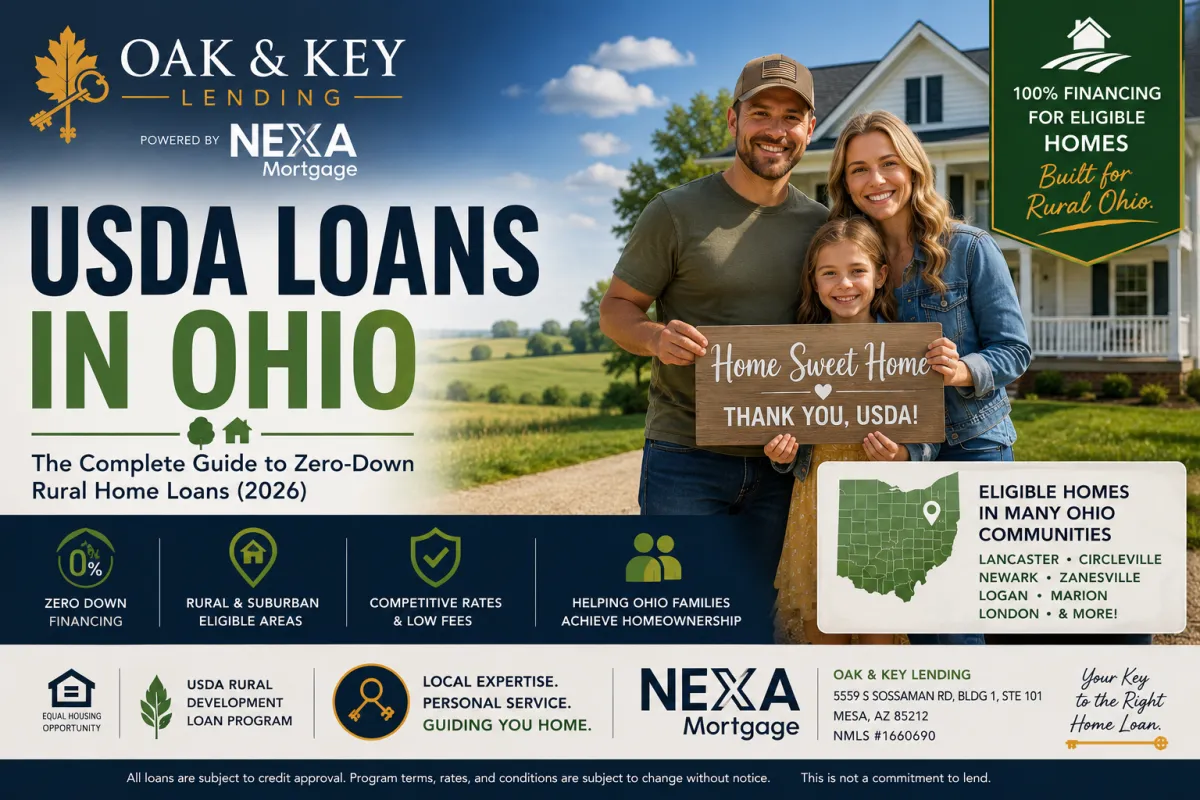
USDA Loans in Ohio: The Complete Guide to Zero-Down Rural Home Loans
If you dream of owning a home in a small town or rural part of Ohio but worry about saving for a big down payment, a USDA loan could be your best path to homeownership. This educational, step‑by‑step guide explains exactly how USDA loans work in Ohio, who qualifies, and how to move from “just looking” to holding the keys to your new home, with no money down.
What Is a USDA Loan?
USDA loans are mortgages backed by the U.S. Department of Agriculture’s Rural Development program. Despite the name, you do not have to be a farmer. These loans are designed to make homeownership more affordable in eligible rural and small-town areas by offering zero down payment and flexible credit guidelines to low‑ and moderate‑income buyers.
In Ohio, USDA loans are especially popular because large portions of the state—outside of major cities—qualify as “rural” under USDA’s definition. From small communities outside Columbus and Cincinnati to towns across northern and southeastern Ohio, many areas are eligible even if they don’t feel “rural” in the everyday sense.
📌 Key Takeaway: A USDA loan is a government-backed mortgage that lets eligible Ohio buyers purchase a home in designated areas with no down payment.
Types of USDA Loans Relevant to Ohio Homebuyers
For most Ohio buyers, the primary program is the USDA Single Family Housing Guaranteed Loan Program. Here’s what that means—and how it differs from other USDA options you might see online:
Guaranteed Loans (Section 502 Guaranteed): Issued by approved private lenders (banks, credit unions, mortgage companies) and backed by USDA. This is the main zero‑down loan used by Ohio homebuyers for purchasing or refinancing a primary residence in eligible areas.
Direct Loans (Section 502 Direct): Funded directly by USDA for very low‑ and low‑income households. These loans have stricter income limits and are less common but can offer subsidized interest rates and payment assistance.
This guide focuses on the Guaranteed USDA loan, as it is the one most Ohio buyers use when working with local lenders and real estate agents.
Why USDA Loans Are So Attractive in Ohio
USDA loans combine several powerful benefits that are hard to match with conventional or even FHA loans—especially for buyers without large savings. Key advantages include:
Zero down payment: Finance up to 100% of the home’s appraised value, which means you can buy without years of saving for a down payment.
Competitive interest rates: Because USDA loans are government‑backed, lenders can often offer interest rates that are as good as—or better than—many low‑down‑payment conventional loans.
Flexible credit standards: You don’t need perfect credit. Many lenders can approve borrowers with mid‑range credit scores if other factors are strong (stable income, low debts, clean recent history).
No monthly PMI in the traditional sense: Instead of private mortgage insurance, USDA charges a modest upfront and annual guarantee fee, which often results in a lower monthly cost than FHA or some conventional loans with mortgage insurance.
Ability to roll in closing costs (in some cases): If the home appraises for more than the purchase price, you may be able to finance certain closing costs into the loan amount.

USDA loans often lower upfront costs enough to move renters into ownership years sooner.
Who Is Eligible? USDA Loan Requirements in Ohio
1. Property Location: Is the Home in an Eligible Ohio Area?
USDA loans are only available in designated rural or small‑town areas. The good news is that many Ohio communities qualify, including suburbs and outlying towns that are a short commute from major cities. Generally, the closer you are to the center of a large city, the less likely the property is to be eligible; the farther out you go, the more options open up.
Visit USDA’s official eligibility website (search “USDA property eligibility”).
Select “Single Family Housing Guaranteed” and enter the property address or zoom into the map in your area of interest.
If the map shows the location as eligible, that property can potentially be financed with a USDA loan.
💡 Pro Tip: Ask your real estate agent or lender to focus your home search on USDA‑eligible areas from the start. This saves time and prevents falling in love with a home that doesn’t qualify.
2. Income Limits: Do You Fall Within Ohio’s USDA Guidelines?
USDA loans are meant for low‑ to moderate‑income households, so there are maximum income limits that vary by county and household size. In Ohio, these limits are typically based on:
The median income in your county
The number of people in your household (including children and other dependents)
As a rough guideline, many Ohio counties have a base income limit for a 1–4 person household and a higher limit for 5–8 person households. These numbers adjust periodically, so you’ll want to check the most current chart on USDA’s website or ask your lender to verify your eligibility.
Also note that USDA looks at household income, not just the income of the person on the loan. That means everyone living in the home with income may be counted toward the limit, even if they are not on the mortgage application.
3. Credit and Debt: Can You Comfortably Afford the Payment?
While USDA sets overarching guidelines, individual lenders in Ohio may have their own minimum credit score requirements. Many look for a credit score around the mid‑600s or higher, though some will consider lower scores with strong compensating factors, such as a long job history or low debt levels.
Lenders also review your debt‑to‑income ratio (DTI)—the percentage of your gross monthly income that goes toward debts like car loans, credit cards, student loans, and your new mortgage payment. As a general rule, they prefer to see your total DTI at or below a certain threshold (often around 41–45%), though exceptions are possible if other parts of your profile are strong.
4. Occupancy and Property Type: Is the Home a Good Fit?
USDA loans are strictly for primary residences. You must agree to live in the home as your main residence; these loans cannot be used for vacation homes or investment properties. Eligible properties include:
Single‑family homes
Certain condominiums and townhomes (if approved by USDA and the lender)
Newly built homes that meet program standards
The home must be “modest” in size and cost for the area and meet basic safety and livability standards. Excessive luxury features or income‑producing structures might disqualify a property, so it’s wise to discuss any unique features with your lender early in the process.
Educational Breakdown: How USDA Zero-Down Loans Actually Work
The Role of the USDA Guarantee Fee
Instead of private mortgage insurance, USDA loans use a guarantee fee to fund the program and protect lenders. There are two parts:
An upfront guarantee fee, which is typically added to your loan amount so you don’t pay it out of pocket at closing.
An annual fee, which is built into your monthly payment and recalculated each year based on your remaining balance.
Even with these fees, USDA loans often result in affordable monthly payments compared with other low‑down‑payment options, especially when you factor in the competitive interest rates and lack of a traditional PMI policy.
Loan Terms, Rates, and Payment Structure
Most USDA loans in Ohio are fixed‑rate, 30‑year mortgages. Your monthly payment will typically include:
Principal and interest on the loan
Property taxes (collected in an escrow account)
Homeowners insurance (also escrowed)
The USDA annual guarantee fee
Because taxes and insurance can vary by Ohio county and even neighborhood, your lender will give you an estimated monthly payment once you have a specific property in mind.
How-To: Step-by-Step Guide to Getting a USDA Loan in Ohio
Step 1: Check Your Basic Eligibility and Budget
Start by asking yourself a few key questions:
Am I open to living in a rural or small‑town part of Ohio?
Does my household income fall near or below the USDA limits for my county and family size?
Is my credit history generally stable, with manageable debts and on‑time payments in the last year or two?
You don’t need exact answers yet, but this quick self‑check helps confirm that USDA is a realistic path. At the same time, think about a comfortable monthly payment rather than just the maximum you might qualify for. This will guide your price range later.
Step 2: Gather Your Financial Documents
Getting organized early can make your USDA loan process smoother and faster. Most Ohio lenders will ask for:
Recent pay stubs (usually last 30 days)
W‑2 forms for the last two years (or tax returns if self‑employed)
Bank statements for the last two months for all accounts
Documentation of any additional income (child support, bonuses, etc.)
Having these ready before you apply can speed up pre‑approval and reduce back‑and‑forth later on.
Step 3: Choose an Ohio Lender Experienced with USDA Loans
Not all lenders offer USDA loans, and among those that do, experience levels vary. When you’re shopping for a lender, ask specific questions:
Do you regularly close USDA loans in Ohio?
How long does a typical USDA loan take from application to closing?
Can you help confirm whether specific properties I’m interested in are eligible?
An experienced USDA lender can guide you through the program’s unique rules and help you avoid delays or surprises.
Step 4: Get Pre-Approved for a USDA Loan
A pre‑approval is a lender’s written estimate of how much you can borrow, based on a review of your credit, income, and debts. For USDA loans in Ohio, pre‑approval helps you:
Confirm that you meet income and credit requirements for the program
Understand your price range and estimated monthly payment before you shop
Show sellers you are a serious, qualified buyer—especially important in competitive markets
During pre‑approval, your lender may also give you a list of any credit or budgeting steps that could improve your approval odds or loan terms, such as paying down a credit card or documenting a recent job change.
Step 5: Work with an Agent to Find a USDA-Eligible Home
Once you’re pre‑approved, it’s time to start house hunting. Partner with a real estate agent who understands USDA loans and rural Ohio markets. Together, you can:
Focus on neighborhoods and towns that are USDA‑eligible
Compare property taxes and utilities, which can vary significantly between Ohio counties and townships
Look for homes that meet USDA’s safety and condition standards, minimizing repair issues during appraisal
When you find a home you love, your agent will help you write an offer that includes a financing contingency for your USDA loan and any inspections you want to perform.
Step 6: Go Under Contract and Complete the Appraisal
After the seller accepts your offer, the process moves into underwriting and property review. Key steps include:
Appraisal: A licensed appraiser confirms the home’s value and checks that it meets USDA’s basic property standards (safe, sound, and sanitary).
Underwriting: Your lender’s underwriting team reviews your documents, credit, and the appraisal to ensure everything fits USDA and lender guidelines.
If the appraiser notes repairs that must be completed, you, your agent, and the seller will negotiate who will handle them and by when. Most issues are manageable if addressed promptly.
Step 7: Final USDA Approval and Closing on Your Ohio Home
Once your lender’s underwriter issues a conditional approval and all conditions are satisfied, the file is submitted to USDA for final sign‑off. This extra review is unique to USDA loans and can add a short amount of time to the process, but experienced Ohio lenders plan for it in your closing timeline.
At closing, you’ll sign your final loan documents, pay any remaining closing costs (or have them covered by seller concessions or rolled into the loan, if allowed), and receive the keys to your new home. From there, you simply make your monthly payments like any other mortgage.
Common Questions About USDA Loans in Ohio
Can I Use a USDA Loan for a Fixer-Upper?
USDA loans are mainly designed for homes that are move‑in ready and meet minimum property standards. Minor repairs may be acceptable, especially if they can be handled before closing, but homes needing major structural work or extensive renovation may not qualify. If you’re drawn to a fixer‑upper, discuss renovation loan options with your lender, as USDA may not be the best fit in that case.
Do I Ever Need a Down Payment with USDA?
In many cases, no down payment is required. However, if the home’s price is higher than the appraised value, or if you want to lower your monthly payment, you can choose to put money down. Some buyers also contribute funds to cover closing costs if they cannot be rolled into the loan or covered by the seller.
Can I Refinance into or out of a USDA Loan?
Yes. USDA offers streamlined refinance options for existing USDA borrowers, and you can also refinance a USDA loan into a conventional mortgage later if it makes financial sense. This can be useful if your home value rises significantly or you want to remove the annual guarantee fee at some point in the future.
Practical Tips to Strengthen Your USDA Loan Application
Stabilize your employment: Lenders prefer at least two years of consistent work history in the same field, especially for salaried positions common in Ohio’s healthcare, education, and manufacturing sectors.
Keep new debts to a minimum: Avoid financing a new car or opening multiple credit accounts while you’re preparing to apply or are under contract on a home.
Document everything: If you receive gifts from family for closing costs or have irregular income, keep clear records and be ready to provide documentation.
Respond quickly to lender requests: USDA loans involve both lender and government review, so timely responses to document requests help keep your closing on track.
USDA vs. FHA vs. Conventional: How Zero-Down Rural Loans Compare
When you’re exploring home financing in Ohio, it helps to see how USDA stacks up against other common options:
USDA: 0% down, rural/small‑town areas only, income limits apply, primary residences, competitive rates, guarantee fee instead of traditional PMI.
FHA: 3.5% minimum down payment, available statewide (no location restriction), more flexible credit, but higher mortgage insurance that lasts for much or all of the loan term.
Conventional with low down payment: 3–5% down options, broader property choices, often higher credit score requirements, and PMI that can be removed later if you build enough equity.
For buyers who qualify and are happy to live in an eligible Ohio community, USDA’s zero‑down structure often provides the most affordable path into a home, especially when savings are limited but income is steady.
Final Thoughts: Turning Your Ohio Rural Home Dream into Reality
USDA loans are one of the most powerful—and often overlooked—tools for Ohio residents who want to own a home outside major city centers. By combining zero down payment, flexible guidelines, and broad eligibility across many of the state’s towns and rural areas, they can move you from renting to owning far sooner than you might expect.
Use this educational guide as your roadmap: confirm your eligibility, partner with an experienced USDA lender, focus your home search on qualifying areas, and follow the step‑by‑step process from pre‑approval to closing. With the right team and a clear plan, a USDA loan can turn your vision of a quiet Ohio home, on a side street in a small town or along a country road, into a reality, without the barrier of a large upfront down payment.
